Risk vs Reward
Adam Bixler

Casinos give a rush to the core of the gambler. It surges them onward even with the stakes high and stacked against them. “All in” is a common term that most, even non gambling types, can recognize. It signifies a willingness to put everything on the line for the biggest payoff or an abrupt end to their run. The fear of defeat cripples most to inaction. Being able to make the call to put all the chips on the table is quite the spectacle to say the least. But knowing when to risk it all isn’t as easy as they make it look at these big poker tournaments. It isn’t your money on the table after all.

Obviously, the Transformers TCG is not the same as poker but the skill to assess risk and reward is key to victory. There are four ways using risk assessment while playing and deck building can increase your overall success in a tournament:
(1) Character and card choice when deck building.
(2) Attack Patterns and Sequencing
(3) Deck/archetype choices.
When building a deck, there is a constant struggle to balance the opportunity cost within. Opportunity cost is defined as the loss of potential gain from other alternatives when one alternative is chosen. For instance, in Bugs the deck mainly focuses on pushing constant damage and all Orange pips to support that. By choosing that route the deck obviously loses any defensive ability. So, when building that deck orange pipped cards must be highly efficient as well as providing as high of a damage output as possible. Does it help push a lot of damage? Looks like bugs wants it. You must judge each card by how useful they are to the plan of each individual deck.
Not all decks need to follow the same formula as bugs, however. Take mixed pip decks (General Optimus, Major Shockwave) for example. There are different risks and rewards for each card choice.
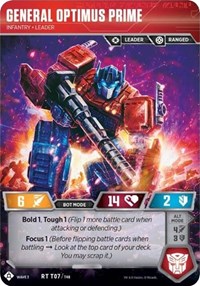
In General Optimus the risk in having blues in a mainly offensive strategy is that sometimes an opposing character may not be killed or put into range of a direct damage action. Major Shockwave can have the opposite outcome. flipping a bunch of orange on defense and having the marque character crippled or worse doesn’t feel too good. The reward for this deck building strategy is that when the shoe is on the other foot it helps the deck edge out victory from the jaws of defeat. That one extra blue in General Optimus may let a character live to strike again or the orange pips that Shockwave flips may result in an unexpected KO. Therein lies the reward for not going straight blue or orange.
Along with pip choice, there is the risk of cards being extremely useful or painfully bad in each situation. Take a card like Smelt:
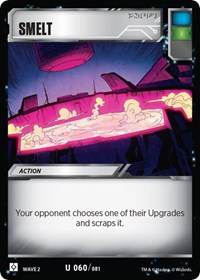
It can be very good as a one-of that helps pick off armors or strong weapons. The risk is that sometimes it cannot get to the desired upgrade. So many Field Communicators and Bashing Shields…
Putting aside my bad luck, the reward of the card comes from its green pip. Easy to get and it is great against decks that hasn’t put down upgrades that have already gained value. Vaporize may destroy anything but unless you are running Battlefield Legend, good luck making sure you have it when you need it.


Blank cards also have their own risks and rewards that may see more obvious. Blank pips mean no help on offense or defense. But the effects are so powerful when played it is worth the miss. However, they are only powerful when used correctly. Using I Still Function on the wrong turn can cost you the game. The damage from One Shall Stand can also equate to a loss if timed incorrectly. However, the reward of winning the game right there and then is too much to pass up. In bugs, I Still Function can guarantee two attacks in a single turn on a strong character, which can swing the game in your favor. One Shall Stand can secure a kill that was otherwise impossible. At the very least it saves an awkward attack. You can’t fill every deck to the brim with these powerful cards because they count for nothing in the battle flip department. So, you must balance your deck accordingly. It just depends how much you want to sacrifice for power.

Attacking in Transformers is one of the easiest ways to lose the game on the spot. Let me explain as I’m sure I’ve lost a few. Sending the wrong character at the wrong time is a sure-fire way to give your opponent the game. It happens more often than players realize. there are valid reasons why you would send your key character early but that is normally for situations where you need to risk it all or you will lose anyway. Most of the time this is not recommended, so please stop sending your Wheeljack into me so early. Determining when to make a risky attack is not really something that is easily recognizable. Its incredibly easy to judge a game of poker that you are not playing in. It becomes easy to recognize when another player should raise a bet or fold. The same holds true when attacking in this game. It’s easy to say once all the information is out that if only you had made that big attack on turn “x” you could have won. Hindsight is 20/20 after all. The best way to determine when to get risky with an attack is when you are already at a disadvantage. Meaning you will likely lose unless a miracle happens. The best way to increase the chance of a miracle is to boldly attack. The best example is bugs versus any 3 wide orange deck. Bugs has a huge advantage because of their extra attacker. Your best bet is to make a risky yet calculated strike. Trying to knock out a key character like kickback on the first turn might be the only way to get that miracle win. Back in wave 1 it was also similar to when Double Primes sent Optimus first for the one shot on a bug and then hoped their armor stuck. It was enough to outpace them (obviously before Bashing Shield was released). The risk of exposing Optimus that early would hopefully reward you by stealing their best attacker before being able to swing.
Most of the time, however, you will make risky attacks out of greed to put yourself further ahead.
I believe it is defensible in certain games. Making a risky power play early can cement victory on that turn. It can also result in a loss just as quickly if it fails.

Imagine going against a typical cars list. They send Bumblebee first. If you retaliate with your best attacker and can KO Bee, they are in for a world of hurt. You have set them back a ton. No untaps. No extra cards.

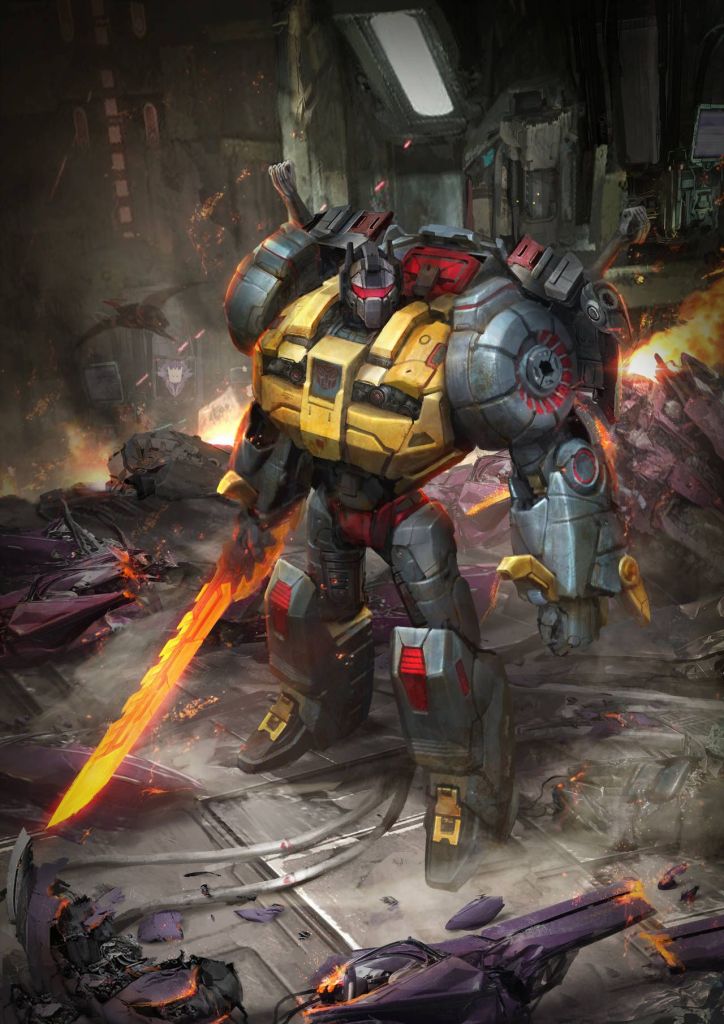
The final point I’d like to address is the metagame. Knowing your meta allows for you to make a better call of when you can pull out a riskier deck choice and not be punished. If you know that 90% of your area is going to be 3 wide blue decks with a ton of burn, Bugs might not be the way to victory. Proper meta calls are sometimes difficult to make, especially since the game is so new and there isn’t a set list of decks that everyone has gotten “on board” with. But this also allows you to take a bigger chance that a rogue style deck can succeed. For instance, at Origins the first day was all bugs all day. Everything that wasn’t extremely blue got destroyed. On day 2 I wasn’t sure what to play and thought maybe I should play something blue based because bugs are a force that shouldn’t be ignored. Mark Kinney however said to “just play double Grimlock and you’ll be fine.” It was a risk I wasn’t sure why he would say to take. However next thing I knew, I was 4 and 0. Turns out other people had the same idea. Play a blue deck to hose bugs. So being one of the few heavy 3 wide orange decks turned out to be just the ticket. Grimlock and Wheeljack were able to smash through the field while my opponents were not ready to handle them.
When the time comes to make the decision(s) that will result in a win or loss, its much more difficult than it seems. You are no longer the bystander making Captain Hindsight observations. When do you go big or go home? Honestly, there isn’t a cut and dry answer. Its mostly varying shades of gray. However, I have found that if you are struggling with the decision of whether or not to pull the trigger, you should just risk it for the biscuit. Play as if you are guaranteed the win. Ignore the cards that could lose it for you and pretend they don’t exist. If you were going to lose to those cards then there was nothing you could do about it anyway. Playing this way will force your opponent to actually have the answer. If they have it, then they have it. As for meta calls and deck building the same mindset applies. Build to your deck’s strengths and just hope to dodge the bad matchups. So its time to ante up and put the chips on the table. Time to risk it or go home hungry!

 Dark Confidence: Competitive TCG Analysis