Kimeramon is, by far, my favorite Digimon who exists in the 1.0 format. Being able to have a Digimon answer an opposing ‘mon for the small price of seven memory as well as a sacrificial lamb may be too much for many players to stomach. His inclusion within his own color seems obvious. Purple thrives on having cards fill the Trash as well as reward you for their deletion. Answering an opposing player’s Ultimate (Level 5), or lower, while setting up the board to digivolve into a mega, namely Beelzemon, is difficult to combat. However, today, I’d like to discuss his utility within off-color decks and how to mitigate the drawback of having to delete one of your own. In certain scenarios it can be more advantageous than others.
“Every act of creation is first an act of destruction” – Pablo Picasso
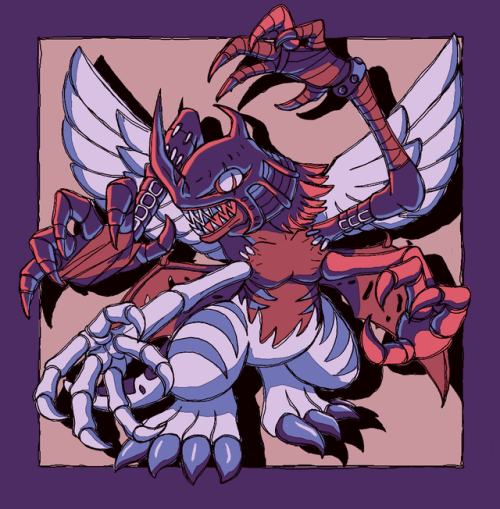
Admittedly, I may have an unhealthy attachment to Kimeramon. He has been creeping into almost every single deck I build, and often in multiples. His high memory cost favors an aggressive play style to stifle the development of your opponent just long enough to snag an extra Security Check or two. In non-purple decks, he simply attacks until he’s trashed. The worst-case scenario is that he takes out an opposing digimon and a lone security or elicits a block; in which case he has greatly affected the board by taking out multiple opposing mons. His true strength comes from never needing to be held back while searching for something to evolve him into because there is nothing to find when teched into non-purple decks.
There are two main ways to use Kimeramon:

Value
Tempo
Note that certain colors can extrapolate Value from their Tempo plays.

How exactly am I defining these categories?
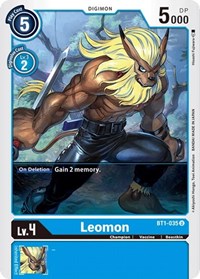
Value is straightforward for us. Any additional effect that may trigger on deletion from one of your own Digimon coupled with the deletion of an opposing Ultimate (or lower) from Kimeramon himself, grants value. Munch on a Tapirmon or Wizardmon to draw a card. Snack on a Leomon to lessen the memory advantage. Devour a Kenturosmon to snipe down two large threats from your opponent. These value plays are incredibly synergistic and allow for multiple effects for a sizeable memory investment, but the dividends paid are great.
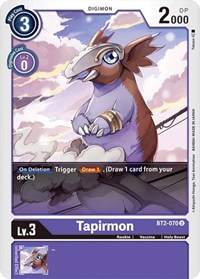
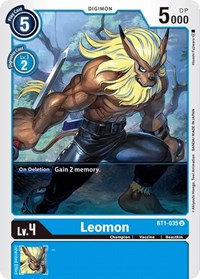
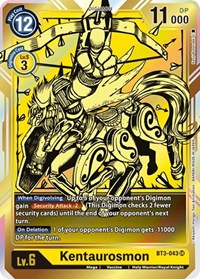
Tempo is slightly more complicated to recognize as it changes at every point in the game depending on what threats are being presented while directly correlating to your ability to apply pressure. Tempo plays are meant to force your opponent on the back foot either by stifling their ability to build up to a powerful Mega (Level 6) or break up their defenses in ensure a successful push the following turn. Some of the easiest tempo plays involve one of your “useless” Rookies (Level 3) being sacrificed for the greater good. Other times you have a preformed a successful security check but know for certain that digimon will die to an incoming attack. Instead of allowing your opponent to make the choice that benefits them the most, use Kimeramon to take out something problematic on your own terms.
The Tempo-Kimeramon has a higher probability of punishment, however. The best time to execute this maneuver is when the opposing Rasing Area is vacant and the effect will leave the board close to, if not, empty. Therefore, a combination of Value and Tempo allows us to garner the most advantage with the lowest amount of risk.

Take the following decklist for example:
- 4x Upamon
- 1x Wanyamon
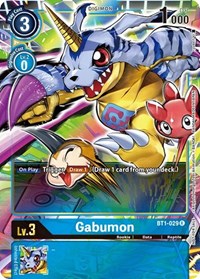
- 3x Gabumon
- 2x Gabumon (Starter)
- 4x Gomamon
- 4x Elecmon
- 4x Leomon
- 4x Gorillamon
- 4x Grizzlymon
- 4x Monzaemon
- 3x LoaderLiomon
- 1x Zudomon
- 2x Kimeramon
- 4x Plesiomon
- 2x Metalgarurumon
- 1x MetalSeadramon
- 3x Omnimon
- 4x Hammer Spark
- 1x Tai Kamiya (Starter)
For a visual, check out the link to the greatest deckbuilding website for the Digimon TCG:
https://digimoncard.dev/deckbuilder/91e71477-7c81-11eb-9a98-0cc47a3449a4
This list has brought me a moderate amount of success while still being interesting to pilot. At first glance, it seems to just be a normal blue Turbo-Omni deck built with some “odd tech” choices included. All the card choices are deliberate and serve a higher purpose instead of being different just for difference’s sake.

How many times have we seen Blue Omnimon dominating tournaments? The consensus is that it is the “best deck” within the set 1.0 format. It can fully take advantage of both consistency and power while sacrificing truly little on either axis. It can operate and create memory choke points that other decks simply cannot consistently deal with. It does have one glaring weakness: Lack of removal. Enter KIMERAMON. The man of the hour really shines in this list. Blue has the consistent power to churn through their deck with a breakneck velocity so being able to find him should be quite easy. The “dream” scenario is eating a Leomon with an inheritable Gomamon underneath him to appease the appetite of Kimeramon and throttle down his cost to a measly four memory!
Metalgarurumon can make snacks while he attacks.

One omission is Garurumon.
We are consciously sacrificing the synergy between Garuru and MetalGaruru to make a wide board incredibly quick to facilitate a different, and more aggressive, playstyle that revolves around another Ultimate.
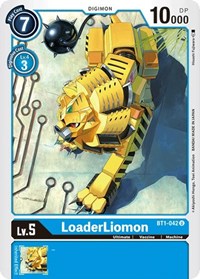
LoaderLiomon is one beefy boi. On level, he is only matched by his red counterpart. He is also able to go toe to toe with certain utility Megas like Puppetmon and Piedmon. This guy will dominate the vast majority of boards where he is deployed as well as surviving multiple security checks. After a successful check, he makes an ample target to clear out an opposing Ultimate to stifle a possible Mega into Omni turn or just do some crowd control to protect from a card like Galantmon. This creates Tempo while allowing Kimeramon to keep up the pressure. MetalGarurumon effects (Gabumon and Leomon) create Value for Kimeramon.
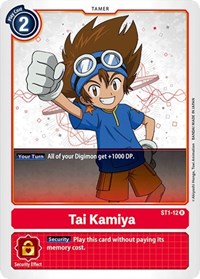
The lone Tai Kamiya is a concession to Leomon. Many times, you want Leomon to die when he checks security, but you do not want an opposing blocker to just stand in the way for free and halt your entire offensive push. Tai allows Leomon to push through the blockers and clear them out of the way while gaining additional memory for an explosive turn. He also takes the spot of a fourteenth rookie. Many players prefer between six and eight of the efficient vanilla rookies since they are phenomenal at limiting your opponent’s memory. Tai also functions as another pseudo-choke tool with a bonus while in play.
Give it a spin before the meta changes completely with 1.5’s release now just around the corner. Try new things even if people say it won’t work. You won’t know what new strengths you will unearth if you are too afraid to sacrifice something for the greater good.

“Innovation is the unrelenting drive to break the status quo and develop anew where few have dared to go.”
Steven Jeffes
 Dark Confidence: Competitive TCG Analysis